


From micro-cultural routes to heritage governance tools
- GreenerEU

- Feb 5
- 3 min read
Updated: Feb 26
SMAPS: Building Sustainable Tourism in Venice Through Cultural Heritage, Innovation, and Alliances
Venice is not only a global tourism destination; it is a living cultural ecosystem shaped by centuries of exchanges, communities, craftsmanship, and intangible heritage. Yet, like many historic cities, it faces increasing pressure from mass tourism models that prioritise volume over value.
SMAPS (Sustainable Maps) were created to respond to this challenge by offering a heritage-led, people-centred approach to tourism, grounded in innovation, cooperation, and long-term sustainability.
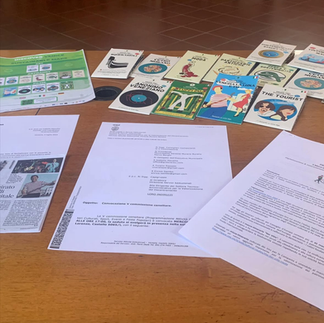
At their core, SMAPS are micro-cultural routes designed to guide visitors through lesser-known areas of Venice, fostering meaningful engagement with local heritage while supporting balanced visitor distribution and local economies.
A heritage-led vision inspired by the Faro Convention
The conceptual foundation of SMAPS is strongly aligned with the Council of Europe’s Faro Convention on the Value of Cultural Heritage for Society, which recognises cultural heritage as a shared resource and emphasises the role of communities, access, and participation.
In this spirit, SMAPS:
Place people and communities at the centre of heritage interpretation
Promote shared responsibility between visitors, residents, and institutions
Treat cultural heritage as a driver of social cohesion, innovation, and sustainable development
Rather than presenting Venice as a static monument, SMAPS frame the city as a living heritage landscape, where tangible and intangible elements coexist and evolve.
Micro-cultural routes aligned with the Council of Europe’s Cultural Routes
Each SMAP functions as a micro Cultural Route, aligned in vision and methodology with the Council of Europe’s Cultural Routes Programme.
These routes:
Connect tangible and intangible cultural heritage
Encourage slow, conscious, and place-based exploration
Support intercultural dialogue and cultural exchange
Translate European cultural policy principles into local, operational tools
By working at a micro scale, SMAPS allow for context-sensitive tourism development, respecting the carrying capacity of neighbourhoods while enhancing the quality of visitor experience.
Building alliances across institutions, culture, and the private sector
A defining element of SMAPS is their multi-stakeholder governance model.
From the outset, the project was developed through structured collaboration with:
Public institutions
Cultural organisations
Hotels and hotel groups
Local businesses and economic operators
These alliances reflect the growing need for integrated governance between culture, tourism, and the private sector. SMAPS demonstrate how public–private cooperation can move beyond sponsorship models to become a shared framework for responsibility, storytelling, and impact.
Through this approach, cultural heritage is not extracted or commodified, but collectively valorised.
Hotels as cultural gateways
Within the SMAPS model, hotels play a strategic role as interfaces between visitors and the local cultural ecosystem.
By integrating SMAPS into hospitality infrastructures:
Hotels become cultural gateways, not just accommodation providers
Guests are empowered to explore Venice in a more informed and respectful way
Visitor behaviour shifts from consumption to participation
This model transforms hospitality spaces into points of cultural mediation, strengthening the relationship between visitors, heritage, and local communities.
Innovation as a tool for cultural valorisation
Innovation within SMAPS does not aim to replace tradition, but to enhance accessibility, interpretation, and engagement.
Through design, storytelling, and hybrid tools, SMAPS:
Make complex heritage narratives accessible to diverse audiences
Support digital and physical integration
Enable scalability and replication in other territories
Innovation, in this context, becomes a means of governance, translating policy frameworks into tangible experiences and measurable outcomes.
Towards a sustainable tourism model for historic cities
SMAPS represent a practical response to one of the central questions facing historic cities today:
How can tourism support cultural heritage rather than erode it?
By combining:
Heritage-led methodologies
Institutional alignment
Multi-stakeholder alliances
Hospitality sector engagement
Innovation-driven tools
SMAPS offer a replicable model for sustainable, culturally responsible tourism development.
Venice does not need more tourists.
It needs more aware travellers, stronger alliances, and smarter governance tools.
SMAPS are one step in that direction.




Comments