


Murano Unveiled: A Slow Journey Through Furnaces, Stories, and Human Connections

Murano Experience – Discover the Art of Venetian Glass (working title)
Murano; Venice; Glass; Furnace; Craftsmanship; Tradition; Manufacturing; Glass Master; Beads/Chandeliers; Slow Tourism
When people think of Murano, the collective imagination often turns to luxurious shop windows filled with precious glass creations: monumental chandeliers, richly decorated mirrors, colorful vases, or small glass animals ready to be purchased as souvenirs — a little piece of Venice to take home.
But what do we really bring back with us?Do we ever stop to think about the time enclosed within those objects? About the complexity of the processes, the gestures passed down through centuries, the techniques that today are slowly at risk of disappearing? Or has Murano glass become something to consume quickly, swallowed by the fast and insatiable rhythms of mass tourism?
It is precisely from these questions that our tour was born.
Not a simple tourist itinerary, but an experience designed for those who wish to discover a different Murano — far from the logic of mass tourism and closer to the authentic soul of the island.A journey made up of a few carefully selected stops, small “pearls” rich in meaning and content, where time regains its value and human connection becomes central.
Here, visitors do not enter workshops merely to observe a finished product. They enter to listen, understand, and engage in dialogue. Artists and artisans open the doors of their studios to share not only a craft, but also a part of their lives, their knowledge, and their memory.
As privileged spectators, we witness the transformation of matter itself: sand becoming glass, taking shape, color, and light. A tangible form of magic made of heat, precision, experience, and sacrifice.
The Experience
The day begins in the heart of Venice, with breakfast in one of the city’s most charming squares: Campo San Giovanni e Paolo. In a historic pastry shop, surrounded by the aroma of coffee and freshly baked pastries, the tour begins slowly and convivially — almost as if preparing the eye and mind for what is to come. From there, we head to the vaporetto and depart for Murano.
Arriving on the island feels suspended in time, almost surreal. Historic furnaces, galleries, ateliers, and glass workshops follow one another along the canals and narrow streets, as though glass were the island’s only possible material. And in many ways, in Murano, it truly is.
The first part of the experience is dedicated to discovering the art of glassmaking: from the molten glass blob to the finished object. Participants explore traditional techniques, the complexity of the processes, and the extraordinary world of color pigments — the result of recipes carefully preserved and passed down over generations.
By observing the objects closely, visitors learn to recognize details that often escape a superficial gaze: floral motifs, symbolic decorations, and the history of the famous Maria Theresa chandelier, which has fascinated generations of visitors and collectors from the eighteenth century to the present day.
Walking along the Fondamenta dei Vetrai, among reflections and transparencies, we then reach the Archpriest Church of San Pietro Martire, built in the fourteenth century. Inside is preserved a work many scholars attribute to Tintoretto: The Baptism of Christ. A stop that reminds us how Murano is not only about craftsmanship, but also art, spirituality, and history.
The journey continues with an exclusive visit to one of the island’s oldest and most historic workshops. Founded in the early twentieth century, this family-run reality has continued for generations to create unique pieces through techniques handed down from grandfather to grandson, safeguarding an invaluable body of knowledge.
The “pearls” preserved and shown to privileged visitors tell over a century of history. The owner — artist and guardian of this heritage — guides participants through stories of direct experience, anecdotes, demonstrations, and conversation, revealing the secrets of the craft, answering questions, and showing tools and processes that rarely find space within traditional tourist routes.
At the end of the visit, participants are also given free time to experience Murano independently, simply following their own steps before returning to Venice.
What Truly Remains
Interviewing participants after the various experiences, one common feeling consistently emerged: wonder.
Wonder at the complexity of the glassmaking techniques, at the hidden meanings behind recurring decorative elements, and at the sheer number of steps required to create a finished piece.
But above all, wonder at the artisans’ savoir-faire.
Many are deeply impressed by the mastery of the impiraresse — women capable of handling up to eighty needles simultaneously with only two hands while threading glass beads — or by the absolute precision required of master glassmakers. Behind every object emerge hours of work, fatigue, discipline, mistakes, and sacrifice, from which knowledge is learned and refined over time.
And it is precisely this awareness that completely transforms one’s perspective.
The object ceases to be simply beautiful. It acquires weight, memory, and human value. It becomes a tangible testimony to a form of knowledge that risks disappearing.
A Tour Created to Slow Down
This tour was also born for another reason: to slow down.
To step away from the idea of a tourism that races against time, wanting to see everything yet ultimately experiencing nothing. Here, the rhythm is different. It is the slow rhythm of craftsmanship, observation, listening, and understanding.
You return home with something that goes beyond a souvenir: a new awareness, a deeper understanding, and above all, new human connections.
Because today, it is precisely the human dimension of things that we are losing most rapidly — and also the one we should preserve most carefully.
M

ura
no Experience – Discover the Art of Venetian Glass (working title)
Murano; Venice;

Glass; Furnace; Craftsmanship; Tradition; Manufacturing; Glass Master; Beads/Chandeliers; Slow Tourism
When people think of Murano, the collective imagination often turns to luxurious shop windows filled

with precious glass creations: monumental chandeliers, richly decorated mirrors, colorful vases, or small glass animals ready to be purchased as souvenirs — a little piece of Venice to take home.
But what do we really bring back with us?Do we ever stop to think about the time enclosed within those objects?
About the complexity of the processes, the gestures passed down through centuries, the techniques that today are slowly at risk of disappearing? Or has Murano glass become something to consume quickly, swallowed by the fast and insatiable rhythms of mass tourism?
It is precisely from these questions that our tour was born.
Not a simple tourist itinerary, but an experience designed for those who wish to discover a different Murano — far from the logic of mass tourism and closer to the authentic soul of the island.A journey made up of a few carefully selected stops, small “pearls” rich in meaning and content, where time regains its value and human connection becomes central.
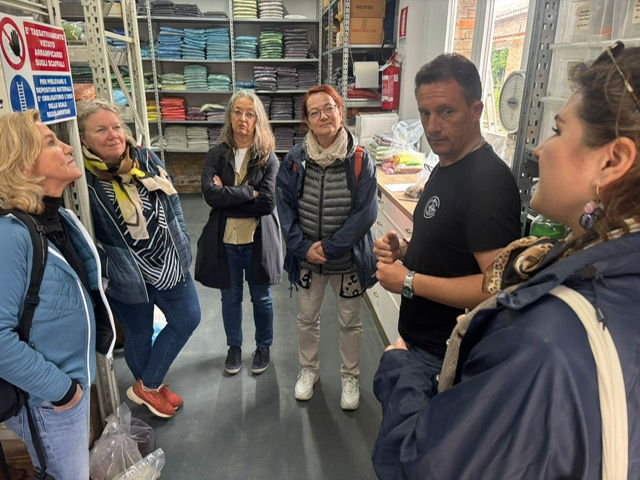
Here, visitors do not enter workshops merely to observe a finished product. They enter to listen, understand, and engage in dialogue. Artists and artisans open the doors of their studios to share not only a craft, but also a part of their lives, their knowledge, and their memory.
As privileged spectators, we witness the transformation of matter itself: sand becoming glass, taking shape, color, and light. A tangible form of magic made of heat, precision, experience, and sacrifice.
The Experience
The day begins in the heart of Venice, with breakfast in one of the city’s most charming squares: Campo San Giovanni e Paolo. In a historic pastry shop, surrounded by the aroma of coffee and freshly baked pastries, the tour begins slowly and convivially — almost as if preparing the eye and mind for what is to come. From there, we head to the vaporetto and depart for Murano.
Arriving on the island feels suspended in time, almost surreal. Historic furnaces, galleries, ateliers, and glass workshops follow one another along the canals and narrow streets, as though glass were the island’s only possible material. And in many ways, in Murano, it truly is.
The first part of the experience is dedicated to discovering the art of glassmaking: from the molten glass blob to the finished object. Participants explore traditional techniques, the complexity of the processes, and the extraordinary world of color pigments — the result of recipes carefully preserved and passed down over generations.
By observing the objects closely, visitors learn to recognize details that often escape a superficial gaze: floral motifs, symbolic decorations, and the history of the famous Maria Theresa chandelier, which has fascinated generations of visitors and collectors from the eighteenth century to the present day.
Walking along the Fondamenta dei Vetrai, among reflections and transparencies, we then reach the Archpriest Church of San Pietro Martire, built in the fourteenth century. Inside is preserved a work many scholars attribute to Tintoretto: The Baptism of Christ. A stop that reminds us how Murano is not only about craftsmanship, but also art, spirituality, and history.
The journey continues with an exclusive visit to one of the island’s oldest and most historic workshops. Founded in the early twentieth century, this family-run reality has continued for generations to create unique pieces through techniques handed down from grandfather to grandson, safeguarding an invaluable body of knowledge.
The “pearls” preserved and shown to privileged visitors tell over a century of history. The owner — artist and guardian of this heritage — guides participants through stories of direct experience, anecdotes, demonstrations, and conversation, revealing the secrets of the craft, answering questions, and showing tools and processes that rarely find space within traditional tourist routes.
At the end of the visit, participants are also given free time to experience Murano independently, simply following their own steps before returning to Venice.
What Truly Remains
Interviewing participants after the various experiences, one common feeling consistently emerged: wonder.
Wonder at the complexity of the glassmaking techniques, at the hidden meanings behind recurring decorative elements, and at the sheer number of steps required to create a finished piece.
But above all, wonder at the artisans’ savoir-faire.
Many are deeply impressed by the mastery of the impiraresse — women capable of handling up to eighty needles simultaneously with only two hands while threading glass beads — or by the absolute precision required of master glassmakers. Behind every object emerge hours of work, fatigue, discipline, mistakes, and sacrifice, from which knowledge is learned and refined over time.
And it is precisely this awareness that completely transforms one’s perspective.
The object ceases to be simply beautiful. It acquires weight, memory, and human value. It becomes a tangible testimony to a form of knowledge that risks disappearing.
A Tour Created to Slow Down
This tour was also born for another reason: to slow down.
To step away from the idea of a tourism that races against time, wanting to see everything yet ultimately experiencing nothing. Here, the rhythm is different. It is the slow rhythm of craftsmanship, observation, listening, and understanding.
You return home with something that goes beyond a souvenir: a new awareness, a deeper understanding, and above all, new human connections.
Because today, it is precisely the human dimension of things that we are losing most rapidly — and also the one we should preserve most carefully.


Comments